
malaria sucks
(mosquitoes really really suck)

Getting malaria is one of the only times in my life where I’ve felt truly helpless, both in the face of figuring out what it means to get healthy, but also what it means for improving the world.
I tested positive three times and was hospitalized twice. The first time, I was largely delirious and constantly hooked up to an IV to keep my fever down. My temperature, at its highest, was over 41°C/105°F. The second time, my symptoms were less severe, but I had severe nausea complications from the medication. I ended up having to be back on IV anti-nausea and sedatives so that I would keep my medication down. The third time, my doctor told me that if I started running a fever or felt ill in any way, they would be hospitalizing me directly in the National Centre for Infectious Diseases (NCID) because there wasn’t anything more the hospital could do for me.
Throughout all this, I was in one of the best hospitals in Singapore with a highly qualified infectious disease specialist handling my case. Both stays were only 5 days. However, there were nights when it was so bad that I remember spamming the call button, crying, and begging for the nurses and doctors to make it better. I was terrified of what malaria would do to me, of how much worse my body could feel.
At my highest, I had a 3% parasite load. Most times, I had less. This means that 3 out of every 100 red blood cells in my blood were infected with malaria parasites. I had no visible mosquito bites at all from my entire trip. 3% was enough to give me jaundice, mess up my liver, and knock me off my feet for 6 weeks (and likely more).
Because of this diagnosis, I started having a lot of conversations I otherwise wouldn’t have had. I learnt that1:
Around 50% of the world still lives in malaria risk areas. Many people living in these areas cannot easily get to a doctor
Nigeria accounts for 25.9% of all global malaria cases despite having only about 2.5% of the world population.
About 75% of Kenya's population lives in malaria risk areas.
Many people across Kenya and Nigeria can get malaria multiple times a year, especially children under the age of 5.
The parasite loads of children are often 5-10x higher than adults.
Malaria bednets are one of the most effective and cost-effective interventions we have against malaria.
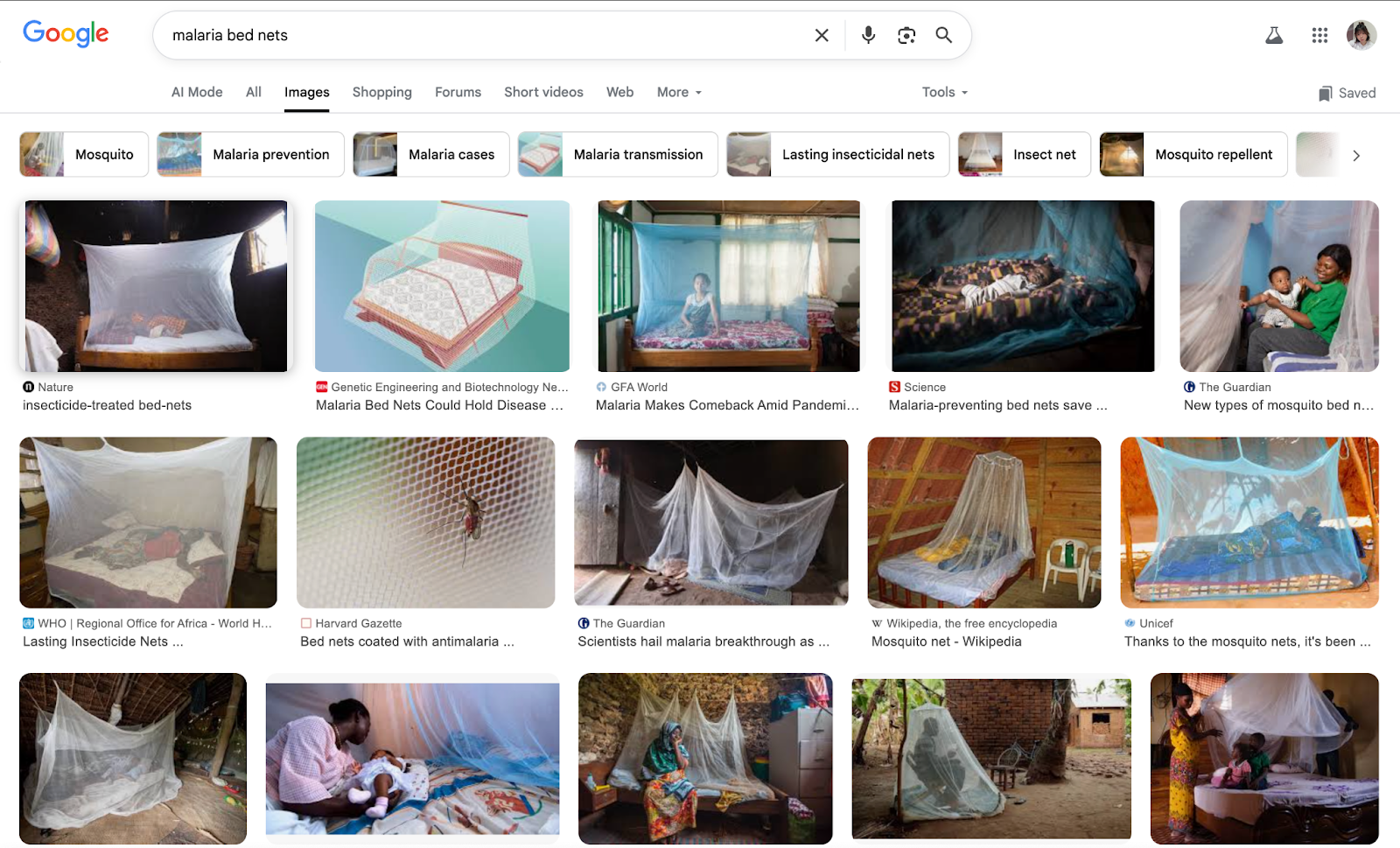
Unlike in Singapore or Germany, I could see multiple mosquitoes flying above someone’s head when we sat down to chat. Knowing that this flimsy-looking piece of netting is one of the best things we could do to prevent malaria cases is heartbreaking. I can’t even begin to imagine what this looks like in the more rural areas.
Many Africans I spoke with have embraced malaria as a fact of life, that it’s just something that they have to go through, like it’s a common cold. I feel angry. This is solvable and eradicated in so many countries. We know what needs to be done, and we have fixed this before.
More so, I feel disappointed. I feel disappointed in myself for sweeping this under the rug. I prioritize efforts that want to do good and improve the world. I care about catastrophic risks. I care deeply about people suffering. I’ve spent a significant amount of time working with people on how to attract talent in AI or how we could prevent the next pandemic.
But when was the last time I told someone to consider working on malaria? Or malnutrition? Or intestinal worms? Malaria is a catastrophe; it just wasn’t one I had to face. Diseases of poverty and inequality are one of the world’s greatest ongoing catastrophes, and I won’t ever forget this again.
I didn’t fact-check these beyond a quick search on Claude.
I'm so glad you wrote this and I got to read it, I am going to be thinking about this post 🩷
*hugs* Hope no one else goes through this as well. Please take care!